
Strength endurance progress can be harder to measure than simple cardio distance or heavy lifting numbers. In a barbell class, participants may perform many repetitions, change weights for different tracks and follow tempo-based movement. Without tracking, it can be difficult to know whether strength, consistency and endurance are improving.
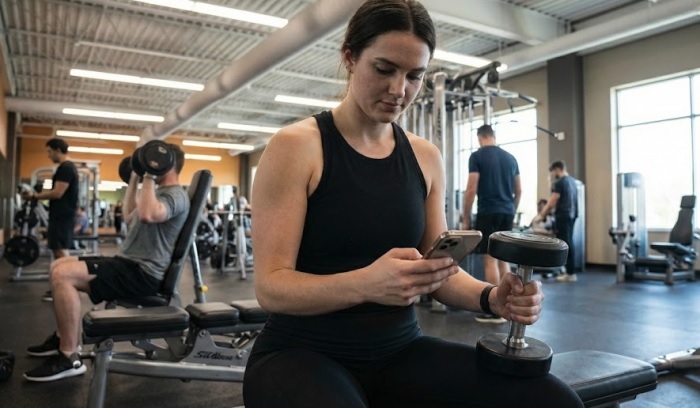
For people attending a bodypump class, fitness apps and simple tracking habits can make progress clearer. Apps can help record class attendance, weights used, perceived effort, recovery and performance trends. This turns a group class into a more measurable training habit.
Tracking attendance shows consistency
Consistency is the foundation of progress. A fitness app can help participants see how often they attend class each week or month. This matters because strength endurance improves through repeated practice.
If attendance is irregular, progress may feel slow. If attendance becomes consistent, improvements are easier to build.
Tracking class frequency is simple but powerful. It shows whether the habit is truly active.
Weight tracking helps progression
In barbell classes, different tracks may use different weights. A participant may use one weight for squats, another for chest, another for back and another for shoulders.
Recording these loads can help show progression over time. If a participant gradually increases weight while maintaining form, that is a sign of improvement.
The goal is not to increase weight every session. It is to build controlled progress.
Perceived effort adds useful context
Numbers alone do not tell the full story. A participant may use the same weight but feel more controlled than before. Another may increase weight but struggle with form.
Tracking perceived effort can help. After class, participants can note whether the workout felt easy, moderate, hard or too difficult.
This helps them choose better weights next time and avoid overreaching.
Recovery tracking prevents overtraining
Strength endurance classes can create fatigue, especially when attended frequently. Apps or wearables can help track sleep, soreness, resting heart rate and recovery trends.
If recovery is poor, participants may choose lighter weights or allow more rest before the next class.
A professional setting such as True Fitness Singapore can support structured training, while digital tools help members understand how their body responds over time.
Apps can reveal patterns
Tracking may show useful patterns. A participant may perform better in morning classes than evening classes. Another may struggle after poor sleep. Someone else may notice that hydration affects performance.
These insights help participants make smarter decisions.
Fitness progress is not only about what happens in class. It is also affected by lifestyle.
Tracking should stay simple
Too much tracking can become stressful. Participants do not need to record every detail. A simple system may include class date, weights used for key tracks, effort level and recovery notes.
This is enough to show progress without making fitness complicated.
The best tracking system is one that people can maintain.
Technology should not replace technique
Apps can track attendance and loads, but they cannot fully judge technique. Participants still need to focus on posture, tempo and instructor cues during class.
Increasing weight is not progress if form breaks down. Movement quality should remain the priority.
Technology supports awareness, but coaching and body awareness remain essential.
FAQ
What should I track after a barbell class?
Track attendance, weights used for major tracks, effort level and recovery. Keep it simple enough to repeat.
Should I increase my weights every week?
No. Increase only when you can maintain good form through the full track. Progress can also come from better control and less fatigue.
My app shows I burned fewer calories than expected. Does that matter?
Not much. Strength endurance classes should not be judged only by calories. Track strength, consistency, form and recovery too.
Can wearables measure strength progress accurately?
Not fully. Wearables can track heart rate and activity, but strength progress is better tracked through weights used, form quality and class consistency.
Conclusion
Fitness apps can help track strength endurance progress in barbell classes by making attendance, weight selection, effort and recovery more visible. This helps participants train with more awareness.
For people in Singapore, simple digital tracking can make class-based strength training more measurable. When technology supports consistency and technique, progress becomes clearer and more sustainable.