

Not long ago, corporate software deployment was an arduous, high-stakes undertaking. Organizations purchased perpetual licenses on physical disks, built dedicated server closets with independent cooling systems, and dispatched internal IT staff to manually install executables across individual desktop computers. A minor patch required deliberate rollout scheduling, and a major version upgrade often meant spending tens of thousands of dollars on new hardware alongside months of operational disruption.
Software as a Service, or SaaS, dismantled that paradigm. By moving application logic, database storage, and compute infrastructure off local machines and into centrally managed cloud environments, SaaS fundamentally transformed how businesses license, deploy, and interact with essential digital tools. What began as a convenient alternative for email and basic customer relationship management has evolved into the dominant operating model of the global digital economy. Yet looking at SaaS merely as a software delivery mechanism misses its deeper commercial significance. At its core, the model represents an operational revolution that frees capital, accelerates execution speed, and levels the competitive playing field for businesses of every scale.
Understanding the Core Architectural Model of SaaS
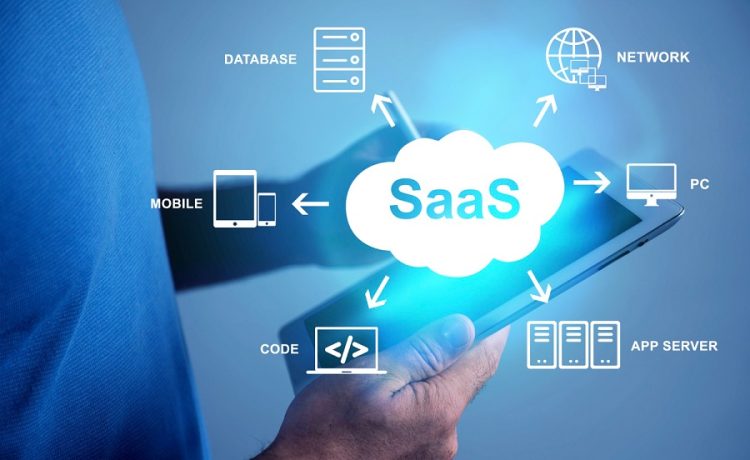
To evaluate the commercial utility of SaaS, one must first understand how it functions beneath the surface. In a standard SaaS framework, a third-party vendor hosts the application on remote cloud infrastructure, maintains the underlying operating systems, manages data storage, and provides access to end users over the internet, typically through a standard web browser or dedicated mobile client.
The defining architectural feature of most SaaS platforms is multi-tenancy. In a multi-tenant environment, multiple customer organizations—referred to as tenants—share the same underlying application code, compute resources, and database infrastructure. Crucially, strict logical boundaries keep each organization’s data completely isolated, encrypted, and invisible to others.
This shared operational architecture generates massive economies of scale for both the provider and the customer. When the vendor optimizes a database query, deploys a security patch, or introduces a workflow enhancement, that improvement propagates instantly to every single tenant across the network. The customer is relieved of the burden of infrastructure provisioning, operating system maintenance, and local network configuration. Software transitions from a depreciating, locally installed asset into a living utility service that functions much like electricity or water.
The Financial Transformation: Shifting from CapEx to OpEx
For executive leadership and financial controllers, the most immediate benefit of adopting SaaS lies in the restructuring of corporate balance sheets. Traditional on-premises software demanded substantial capital expenditure (CapEx) up front. Companies had to purchase perpetual software licenses, buy expensive enterprise servers, invest in uninterruptible power supplies, and budget for unpredictable maintenance contracts. These massive capital outlays tied up valuable working capital and introduced depreciation schedules that constrained operational flexibility.
SaaS replaces these unpredictable capital expenses with a predictable operational expenditure (OpEx) subscription framework. Rather than committing hundreds of thousands of dollars to an unproven on-premises suite, businesses pay an ongoing fee, typically structured on a per-user, per-month, or consumption basis.
This financial restructuring delivers several clear advantages:
-
Working capital preservation: Organizations retain liquidity to invest directly in revenue-generating initiatives, talent acquisition, and market expansion rather than locking funds into server racks.
-
Budgetary predictability: Subscription tiers make forecasting technology costs straightforward, turning IT overhead into a measurable, forecastable operational cost directly tied to headcount and usage.
-
Reduced risk of stranded investments: If a software tool fails to deliver the expected return or if corporate strategy shifts, the business can cancel or downgrade its subscription at the end of the contract term without writing off massive hardware investments.
Operational Elasticity and Accelerated Time-to-Value
Speed of execution often dictates competitive survival. When an organization relying on legacy architecture decides to adopt a new project management platform or enterprise resource planning system, the deployment timeline frequently spans six to eighteen months. Procuring hardware, configuring local servers, testing network compatibility, and staging client rollouts consume enormous amounts of organizational energy.
SaaS collapses this deployment window from quarters to minutes. Because the software environment is already fully provisioned, tested, and running in the cloud, onboarding a new team is as simple as creating user accounts and configuring permissions.
Furthermore, SaaS provides unprecedented operational elasticity. If a seasonal retail business needs to onboard two hundred temporary customer support representatives for the fourth quarter, it can provision two hundred additional seats instantly. When the holiday rush concludes, those licenses can be terminated, returning costs to baseline. This ability to scale software consumption dynamically alongside real-world business demands eliminates the cost of idle capacity that plagued legacy computing.
Liberating Internal IT Resources for High-Impact Initiatives
In a traditional IT environment, senior engineers spend a disproportionate share of their working hours on routine administrative maintenance. They patch operating system vulnerabilities, configure database backups, troubleshoot local hardware conflicts, and restore corrupted file systems.
SaaS offloads this administrative burden to the vendor’s specialized engineering organization. When external providers manage server health, uptime, and database integrity, internal IT departments can pivot away from routine infrastructure maintenance. Technology leaders can redirect their highest-value talent toward strategic initiatives that directly drive business outcomes, such as automating internal workflows, improving customer experiences, and engineering proprietary product integrations.
Eliminating Version Lock and Accelerating Innovation
One of the most persistent vulnerabilities in legacy enterprise computing is version fragmentation. Because upgrading traditional installed software is complex and risky, companies frequently delay updates for years. As a result, different departments within the same company often run conflicting versions of the same tool, creating document incompatibilities, security gaps, and communication breakdowns.
SaaS permanently eliminates version lock. In a modern cloud environment, every user accesses the single, latest production version of the application. Updates, bug fixes, and feature additions roll out continuously in the background without requiring users to download setup files or restart machines.
This continuous delivery pipeline provides companies with an ongoing competitive advantage. When a SaaS vendor develops new capabilities—such as automated invoice parsing, advanced data visualization, or updated regulatory compliance reporting—customers gain immediate access to those features without spending an additional dime or undergoing a disruptive migration project. The software actively improves over the life of the subscription.
Enterprise-Grade Security and Built-In Disaster Recovery
A common early criticism of cloud software was the belief that hosting sensitive corporate data outside company walls was inherently unsafe. However, modern operational reality has inverted that premise. For the vast majority of small, mid-market, and even enterprise organizations, a reputable SaaS platform offers a far superior security posture than what could ever be built and maintained internally.
Enterprise-tier SaaS providers invest millions of dollars into defensive cybersecurity infrastructure. They maintain dedicated security operations teams, conduct continuous penetration testing, enforce end-to-end encryption for data in transit and at rest, and adhere to rigorous compliance certifications like SOC 2 Type II, ISO 27001, and HIPAA. Replicating that level of architectural defense, geographic data redundancy, and automated failover in a private data center is cost-prohibitive for all but the largest tech conglomerates.
Moreover, cloud software delivers comprehensive disaster resilience. If a local facility experiences a power failure, a localized flood, or a physical hardware theft, company data remains insulated in distributed cloud environments. Employees can open a laptop at home or connect from an alternative facility and resume working immediately, protecting business continuity in the face of localized disruption.
Strategic Considerations for Long-Term SaaS Management
While the commercial benefits of SaaS are substantial, realizing its full value requires intentional governance. Unchecked adoption can easily lead to subscription sprawl, where individual teams purchase redundant applications with corporate credit cards without central oversight.
To maintain efficiency, organizations must establish clear procurement standards, consolidate overlapping tools, and audit license utilization regularly to ensure they are not paying for dormant accounts. Additionally, businesses should prioritize platforms with mature, well-documented application programming interfaces (APIs) and clear data export policies to avoid vendor lock-in and ensure smooth data flow across the enterprise tech stack.
The transition to Software as a Service is far more than a technical upgrade or a modern purchasing preference. It is a strategic operational realignment that replaces rigid, depreciating infrastructure with adaptive, scalable capability. By lowering upfront financial barriers, delivering continuous updates, lightening internal IT workloads, and providing enterprise-grade security, SaaS allows modern businesses to remain agile, resilient, and focused on sustainable growth.