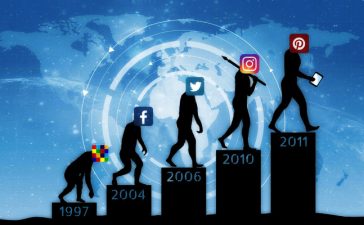

For the first decade of mainstream social networking, text updates and still photography ruled the digital public square. A clever sentence on Twitter or a well-framed photograph on Instagram was more than enough to spark conversation and accumulate thousands of interactions. Today, that static landscape feels like ancient history. Modern social media feeds have transformed into dynamic, synchronized motion streams where static graphics are easily overlooked with a quick flick of a thumb.
This transformation is not an accident of shifting consumer taste; it reflects how human attention naturally operates in an environment flooded with digital noise. Video combines kinetic motion, human vocal tone, pacing, and visual storytelling in a way that static imagery simply cannot replicate. For brands, creators, and organizations attempting to cultivate meaningful digital communities, video is no longer just one optional asset class in an editorial calendar. It has become the primary engine that captures attention, builds authentic affinity, and drives sustained audience engagement.
The Sensory Advantage: Breaking the Habitual Scroll
The modern social media user suffers from chronic digital fatigue. Scrolling through a feed is rarely a conscious, exploratory journey; it is an automatic, near-hypnotic reflex. When an individual encounters a wall of text or another static graphic, their brain immediately categorizes it as passive material that can be scanned or skipped without consequence.
Video fundamentally disrupts that reflex by triggering an involuntary neurological response. Human vision is biologically hardwired to detect motion. When something moves within our field of vision, the brain shifts from passive scanning to active evaluation to determine what is happening.
The power of video lies in how it commands multi-sensory processing. A static image communicates along a single visual dimension, forcing the viewer to infer context, mood, and narrative on their own. Video delivers simultaneous visual and auditory cues, removing cognitive friction and guiding the viewer through an intentional emotional journey. When movement, framing, and sound design align within the opening three seconds of a clip, they interrupt the mindless scroll and demand focused attention.
Algorithmic Architecture and the Primacy of Watch Time
While the psychological advantages of video are undeniable, the technical mechanics of social media platforms amplify them even further. Every major social discovery engine has reconfigured its ranking algorithms around behavioral indicators that video generates more effectively than any other medium.
In the early days of social platforms, engagement was measured primarily by explicit binary actions: a like, a favorite, or a comment. While those actions remain valuable, modern recommendation systems prioritize deeper consumption signals, specifically dwell time and completion rates.
The Value of Active Retention
When a user spends forty seconds watching a video from start to finish, the host platform interprets that prolonged dwell time as an unambiguous signal of quality. The algorithm registers that the content successfully held the viewer’s attention, which in turn prompts the network to distribute the video across broader discovery feeds. A static post that someone glances at for half a second simply cannot generate that volume of algorithmic equity, regardless of how many passive impressions it registers.
The Self-Sustaining Loop of Short-Form Formats
Short-form video formats have supercharged this dynamic by utilizing automated looping mechanisms. When a short video is tightly edited, visually compelling, and seamlessly structured, viewers frequently watch it two or three times before moving on. Achieving a completion rate that exceeds one hundred percent acts as algorithmic rocket fuel, signaling to distribution networks that the asset delivers immediate, repeatable satisfaction.
Emotional Velocity and the Power of the Human Face
Engagement is ultimately an emotional transaction. People do not share spreadsheets, buy products, or join movements based solely on cold logic; they engage because a piece of content made them feel understood, inspired, amused, or challenged.
Text can articulate ideas with great intellectual nuance, but it struggles to convey immediate emotional temperature. Sarcasm falls flat, earnestness can read as corny, and professional authority often translates into sterile corporate prose. Video bridges this gap through unmediated human expression.
A speaker’s facial micro-expressions, vocal cadence, spontaneous pauses, and direct eye contact transmit authenticity instantly. Viewers pick up on conviction and warmth through subconscious interpersonal cues. This explains why polished, multi-thousand-dollar corporate commercials frequently underperform compared to a company founder or product designer speaking candidly into a smartphone camera from their desk.
Viewers do not build relationships with corporate logos; they connect with people. Video collapses the psychological distance between the creator and the consumer, fostering a sense of familiarity that converts casual browsers into dedicated brand advocates.
Narrative Compression and the Demonstration of Tangible Value
Attention spans are not necessarily shrinking, but tolerance for irrelevant fluff has collapsed entirely. Consumers want to extract practical value, learn a skill, or understand an outcome as quickly as possible.
Video excels at narrative compression—the ability to communicate dense, multi-layered ideas in a fraction of the time required by written explanations. Demonstrating how a complex piece of software automates an invoicing workflow might require an eight-hundred-word tutorial complete with multiple annotated screenshots. In a video format, a thirty-second screen capture paired with a crisp voiceover demonstrates the entire workflow in real time.
This show-don’t-tell dynamic is particularly potent for physical products, creative tutorials, and operational advice. Watching an artisan restore a vintage timepiece, seeing a physical fitness transformation, or viewing a split-screen comparison between two competing methodologies provides indisputable proof of competence. By turning abstract promises into tangible, visible evidence, video builds trust far faster than descriptive marketing copy ever could.
Silent Optimization and Kinetic Typography
A common misconception among marketing teams is that video requires a captive audience with headphones turned up to maximum volume. In reality, a massive percentage of social media video consumption happens entirely in silence: on crowded commuter trains, in quiet office cubicles, or late at night while lying in bed.
Creators who fail to design for muted environments lose a substantial portion of their potential audience within the first two seconds. High-performing video strategies embrace silent design principles:
Clear visual cues, dynamic b-roll, and kinetic on-screen typography ensure that the narrative remains completely coherent without a single decibel of audio. Subtitles are no longer merely an accessibility compliance feature; they are an essential engagement hook that guides the viewer’s eye across the frame. When sound is treated as an enhancement rather than an absolute prerequisite for comprehension, the video remains effective across every conceivable viewing environment.
Transforming Passive Observers into Active Participants
The final, decisive advantage of video content is its ability to foster two-way community participation. Traditional media operated as a top-down broadcast, where organizations pushed messages out and audiences received them passively. Social video, by contrast, functions as an interactive sandbox.
Modern video ecosystems provide built-in collaborative tools—such as stitching, side-by-side duetting, and shared audio templates—that invite viewers to react, remix, and contribute their own perspectives to the conversation. When an educational post or commentary video prompts dozens of other industry professionals to film their own video responses, engagement transitions from simple comment-section chatter into an expansive, decentralized dialogue.
Treating video content as an ongoing conversation rather than an isolated promotional broadcast transforms your social presence. It encourages your audience to become active co-creators of your brand narrative, embedding your message deep within the social fabric of your target industry.
The dominance of video across social channels is not an ephemeral trend that will fade with the next software update. It represents the natural evolution of how human beings choose to communicate, learn, and build community in a hyper-connected world. By honoring the viewer’s time, optimizing for silent clarity, leaning into human authenticity, and designing for active algorithmic dwell time, organizations can cut through the endless digital noise and build an audience that truly listens.